
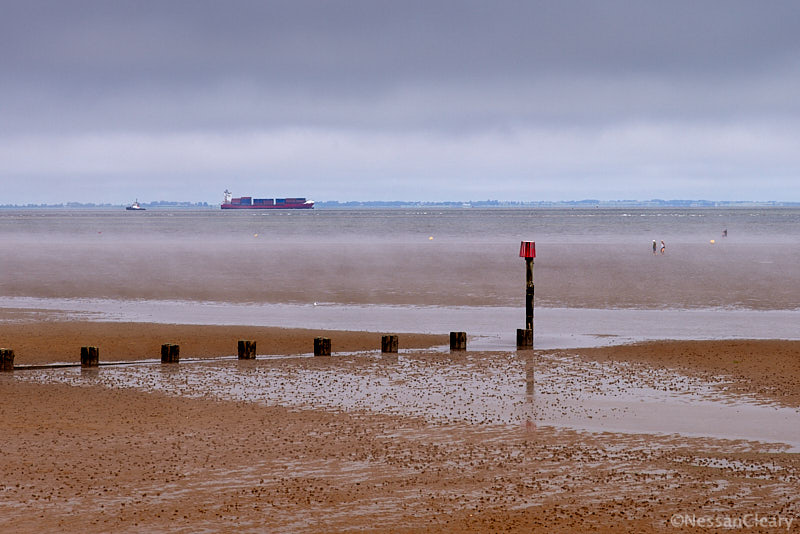
As many of us predicted, the ceasefire between the US and Iran has broken down, with both sides initiating strikes in the Middle East. This has left more ships stranded on the wrong side of the Strait of Hormuz while the oil prices head north again.
The sticking point is control over the Strait of Hormuz. The Iranians had allowed vessels to pass through but insisted they follow a designated channel. The Americans tried to open up a second route, which led the Iranians to attack ships on that route, leading inevitably to a resumption of wider strikes.
And yet the talks themselves have not completely broken down. Instead we are seeing a new normal where military strikes are part of the negotiation, as each side underlines their point by lobbing high explosives at the other. In truth, neither side has any option but to talk with the other and hammer out some sort of a deal despite the threats and missiles. That’s likely to mean a great deal of disruption to shipping in the region for the next few months. This could last up till the end of the year, when both sides will be hoping that the US mid-term elections affect the US president Donald Trump’s freedom to act.
Ominously, Trump has continued to make unsubstantiated claims that the American voting system has been undermined by foreign interests. He has made similar claims in the past over the 2020 election that he lost, and those claims have been investigated and disproved. Yet his continued attempts to undermine the electoral system suggests that he also is planning for poor results in the midterms.
Nor is the US/ Iran conflict the only factor affecting the price of oil. Ukraine has had considerable success in hitting Russian energy infrastructure including oil refinery plants. This means that the Russians are exporting a lot less oil, which despite western sanctions, still plays a big role in the overall global supply of oil and therefore its pricing.
And of course, oil is not the only commodity affected by these wars. All the various conflicts around the world affect supply lines for different goods, with the blockades around Iran particularly hitting fertiliser. This in turn will affect crop production and lead to food shortages, which will hit many economies just as hard as rising oil prices.
This is exacerbated by changing weather patterns, with this year’s super El Niño weather cycle responsible for much hotter weather. That’s caused vicious heat waves and wild fires in parts of Europe that have killed several thousand people over the last few months. It will impact global food production but because of variations in the planting and harvesting cycle we may not notice this until 2028. Nonetheless, it’s predicted to cause a rise in food prices – up to nine percent for some things like soya beans – which will fuel inflation, and we will notice that.
According to a UNESCO report, most developing countries spent more money on servicing external debt than on education in 2025. The problem is aggravated by cuts in aid from the United States and European countries. It’s a vicious circle, as cuts to education make it harder for those countries to grow their economies, and therefore also to break out of this debt cycle. And of course this also fuels the pattern of migration as people from those countries seek better lives elsewhere.
Elsewhere, the European Investment Bank has launched the second phase of the European Tech Champions Initiative in conjunction with the 27 EU governments and several private institutional investors, including AltamarCAM, Azimut Holding, Banco Santander, BBVA, Compagnia di San Paolo, Danske Bank and Green Arrow Capital. The idea is to create a pan-European investment platform to turn EU tech pioneers into global leaders with up to €80 billion for investment. Ultimately the aim is to break the EU’s dependence on American tech companies, which Trump’s volatility has highlighted as a major weakness. The first phase of the ETCI has already supported 15 mega-funds actively investing in European startups seeking to scale up and nurtured the development of 12 EU-based “unicorns” (start-ups valued at more than €1 billion).
This also underscores the damage that Brexit has done to the UK, which has the same shortage in home-grown tech companies but does not have this level of scale. The challenge for the Europeans will be to ensure that the companies that it supports are not simply acquired by bigger players in other regions.
The US government has paid back some $81 billion in refunds after most of the tariff policy introduced last year was subsequently ruled illegal by the US Supreme Court. The US currently implements a 10 percent global tariff that is due to expire on 24 July, but is preparing a new round of tariffs that would skirt around the Supreme Court ruling. Trump has also threatened a 100 percent tariff against countries that apply any kind of tax on American tech companies, which Britain and several European countries already do.
Trump decided against renewing the US Mexico Canada Agreement that he established in his first term as a replacement to the North American Free Trade Agreement. This sets up the possibility that the US may introduce tariffs with its northern and southern neighbours in North America. The biggest loser is going to be the highly integrated North American automotive industry that relies on shipping parts across these borders. But it will also hit many foreign manufacturers – including printing equipment – that might ship goods to a US hub for further distribution to Canada or Mexico.
China’s economy grew by 4.3 percent for the three months to June, according to figures from the National Bureau of Statistics of China, which is lower than expected though still better than many western economies. Nonetheless, data from Chinese customs shows that overseas shipments rose by 27 percent and that the country is likely to exceed last year’s record trade surplus of $1 trillion. That includes a surplus of £135 billion with the EU, with data from the Mercator Institute for China Studies in Berlin showing China benefiting from a surplus in goods with the EU of €900 million a day. A report from the Gavekal Dragonomics consultancy claims that China’s ratio of exports to total manufacturing sales rose to 24 percent for the first four months of this year.
This obviously fuels concerns that dumping of cheap exports from China will undermine other economies. It also suggests that China’s economy is heavily dependent on exports – which contribute roughly 20 percent of China’s Gross domestic product – amid falling consumer spending within the country itself. A good indication of this is the 16 percent drop in sales of new vehicles within China in June, even as the country continues to increase its vehicle exports.
The British government has renationalised British Steel following a change in law, with the current prime minister, Keir Starmer, saying: “British Steel is part of the fabric of our nation and a cornerstone of Britain’s industrial strength.” The company’s main plant in Scunthorpe is losing around £1.3 million per day but is home to the UK’s remaining blast furnace. This is essential for the production of primary steel, making it a strategic asset in the light of a renewed focus on defence. The government has previously accused the Chinese owners, Jingwe Group, of trying to shut it down, highlighting the danger of having sold off too many national assets to foreign ownership.
The latest figures from the Office for National Statistics show that the UK economy grew by 0.1 percent in May, mainly helped by the services sector. However, this was offset by falls in the production and construction sectors. There has been a drop in the inflation rate, down to 3.5 percent in June, but this is expected to rise again following the resumption of hostilities in the Middle East. Huw Pill, the Bank of England’s chief economist, has warned that interest rates will need to increase this year to keep inflation down.
Otherwise, Britain stands at a moment of uncertainty. The brief hope for sporting glory was snuffed out in a semi-final defeat at the World Cup. The more urgent hope – that everything will somehow magically get better – is embodied in the former Manchester mayor Andy Burnham who is set to take over as prime minister on Monday. There has been no leadership contest, no election, no need for him to set out his policies; only the vague concept of Manchesterism that is deeply unsettling for a north London lad like myself, and will be lucky to survive contact with reality for more than 90 minutes.
 Nessan Cleary
Leave a comment