
This week’s annual spring meeting of the International Monetary Fund and World Bank in Washington DC, USA, has set the tone for this month’s geo-economic news, with the meeting itself overshadowed by the ill-advised American-led war in the Middle East.
A report issued by the United Nations Development Program to coincide with this meeting claims that over 32 million people across the globe could be pushed into poverty as a result of this conflict due to higher energy and food costs and weaker economic growth. Alexander De Croo, administrator of the UNDP and former prime minister of Belgium, explained: “You will see an enduring impact, especially in the poorer countries, where you push people back into poverty. That’s the most heartbreaking element. The people being pushed into poverty are very often the people who used to be in poverty, got out of it, and are now being pushed back.”
Kristalina Georgieva, who heads the International Monetary Fund, has also warned that the “scarring effects” from the conflict would mean slower global growth this year than had been hoped for. The IMF had planned to upgrade its global growth outlook for 2026, due partly to the US tariffs being lower this year than expected and increased trade between China, Europe and Canada to counter those tariffs, but this will now likely be downgraded. Not surprisingly, the IMF expects most of the Gulf economies to contract this year, including Iran, Iraq, Qatar and Bahrain.
The US Treasury Secretary Scott Bessent has characterised all this as a “small bit of economic pain” that’s worth it to prevent Iran having nuclear weapons. This has not won him many friends abroad. It’s worth noting that many nations, especially amongst the global south, don’t understand why America can have nuclear weapons but Iran can’t, and many feel that the US is a much bigger threat to world peace. This is not a minority view as these countries, including China and India, account for more than half of the world’s population.
The British chancellor Richard Reeves did not mince her words at the spring meeting in criticising the American president Donald Trump, stating: “This is a war that we did not start. It was a war that we did not want. I feel very frustrated and angry that the US went into this war without a clear exit plan, without a clear idea of what they were trying to achieve.”
Reeves’ plan coming into government was to raise some taxes in the first year knowing that an election was still four years off and hoping that the public would forgive her if she could deliver some economic growth. Trump upended that plan with his tariffs last year, but the latest figures for February show that there were signs of growth returning to the British economy of around 0.5 percent, a distinct improvement on the 0.1 percent growth that had been expected.
The conflict in the Middle East has trashed any hope of an economic recovery this year. The question for the British prime minister Keir Starmer is, at what point does he accept that Reeves has run out of time and replace her with a different chancellor who can come up with an economic plan for dealing with the current reality?
Just to help, the former Labour MP Lord Roberts has stoked tensions over the cost of rearmament, with a call to cut welfare to boost defence spending. Britain is a fairly wealthy country and yet whenever there’s a spending issue those in power always seem to think that the answer lies in taking yet more money from those that don’t have any. What is really needed is a fundamental reform of the tax system to close the gap between the richest and the poorest. It would create a fairer society, but more importantly it would also mean that if a war does break out, then those that are going to be expected to do the fighting and the dying actually have a stake worth risking their lives for.
Trump’s playbook is not dissimilar to any common domestic abuser and is based upon constantly throwing curveballs to keep others off-balance. So far he’s doing a bang-up job, first with last year’s tariffs and this year with military actions in Venezuela and now Iran, not to mention a blockade and further threats around Cuba.
All this has to be seen in the context of the US National Security Strategy that the American government published last November This document explicitly set out the American disdain for Europe and its values, particularly its multi-culturalism, claiming that some European nations will no longer be majority European – meaning white – in 20 years time, and therefore cannot be considered as reliable NATO partners. It also sets out an intention to support Europe’s far right nationalist parties as potential allies and to help such parties replace most current European governments.
In this vein the US vice president JD Vance flew in to Hungary to support Victor Orban and falsely accuse the EU nations of interfering in the Hungarian elections. The Hungarian people responded by voting Orban out of power, choosing instead the more moderate Peter Magyar and a return to the EU fold. It’s a blow to both Putin and Trump, both of whom counted Orban as an ally, which underlines how little the US under Trump now has in common with the rest of the free world.
Meanwhile, Trump has picked a fight with one of the few elected leaders that has more clout than he does, calling Pope Leo XIV “terrible for foreign policy” after the Pope criticised his illegal war in the Middle East and threats to destroy the Iranian civilisation.
Even the Italian prime minister Giorgia Meloni, mindful of her need to court the Catholic vote ahead of next year’s elections, had to rebuke Trump over his attacks on Leo, pointing out that it is normal for any Pope as head of the Catholic Church to condemn war and call for peace. Pope Leo has said that he is not afraid of Trump, but then he is protected by a far higher power.
As it is, the balance of power is shifting in the Middle East. The war has demonstrated the limits of American power and interest to the Gulf states, and the extent of Israel’s military aggression has rattled them. Nor are Trump and his henchmen helping themselves, with their constant and obviously false assertions that they are winning, that they’ve achieved regime change in Iran and that they can just leave this mess for someone else to clean up.
The American blockade around Iran also risks drawing China into this conflict, since the blockade will directly after Iran’s shipments of oil to China. This presumably explains why the American warships have allowed some Chinese-owned ships to pass through.
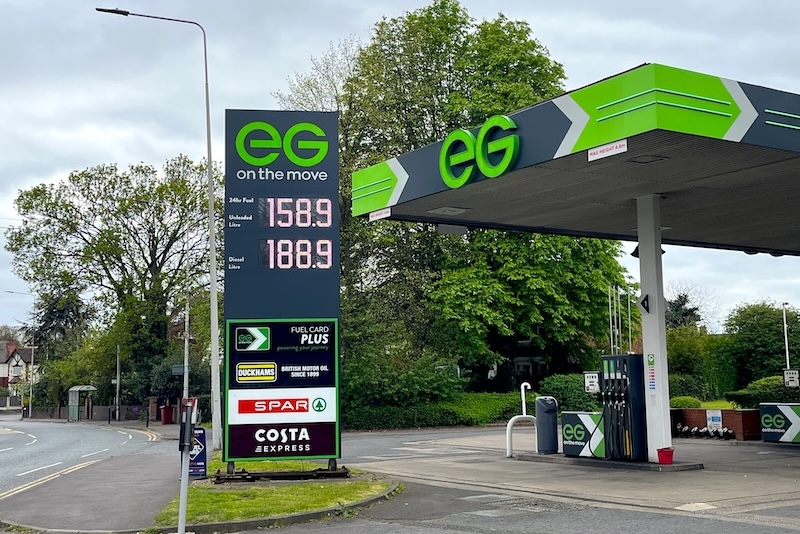
And the balance of power – or at least public opinion – is also shifting in America itself with the latest opinion polls showing that Trump’s popularity has hit new lows. American voters it seems are unhappy that petrol has now hit $4 a gallon at the pumps. Added to this, many American christians are also incensed at Trump’s criticism of the Pope and his posting of several blasphemous AI-generated images of himself as a Christ-like figure, and are starting to realise that he is not the messiah, just a very naughty boy.
And this may explain why the Americans leant on the Israelis to agree a ceasefire in Lebanon today, removing one obstacle to further talks with Iran as Trump desperately looks for a face-saving way out of this mess.


Leave a Reply