
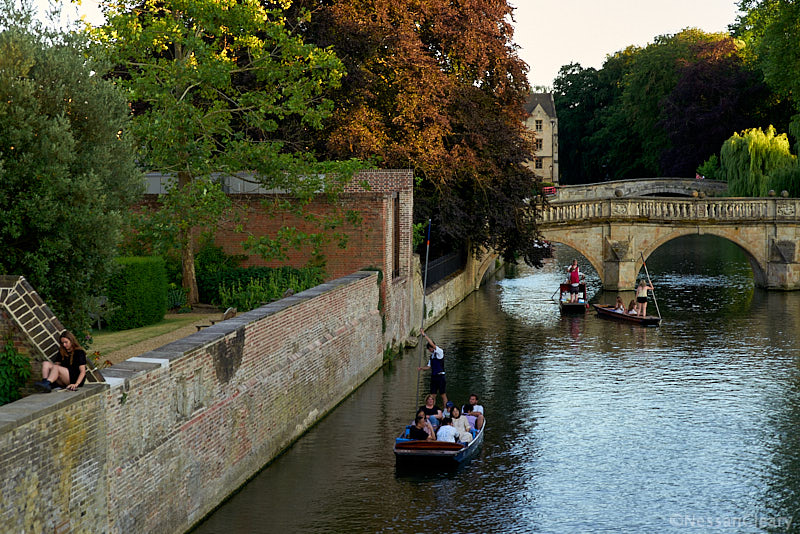
Summertime has arrived in the UK with a heatwave in time for Wimbledon but the living is definitely not easy. On the plus side, England did win the first test at Headingly despite some valiant batting from India. But on the flip side, June has also seen a continuation of the US trade war, escalating conflict in Ukraine and the Middle East and a heightened risk of nuclear war so it’s probably too early to break out the strawberries and champagne.
And all this despite the efforts of one Donald J Trump, president of the USA, to promote himself as a peacemaker. So far his clumsy efforts at peace have made the world a far more dangerous place as this month’s events have demonstrated. Still, full credit to Pakistan for demonstrating its previously unknown comic timing by citing Trump for a Nobel peace prize just two days before he bombed Iran, significantly raising the temperature in the tinder box that is the Middle East.
This chapter began with Israel attacking Iran in a pre-emptive strike aimed at limiting Iran’s ability to develop a nuclear bomb, followed by a call for Iranians to rise up against the authoritarian regime. The Iranian regime clearly represents an existential threat against the state of Israel, as well as a major threat to peace in the region through its funding of Hezbollah, Hamas and the Houthis. So Israel has every right to counter this threat and taking out the Iranian regime is in many peoples’ interest.
Several American media reported that Trump had asked Israel to hold off on military action while he was still negotiating with Iran. The Israeli Prime minister Benjamin Netanyahu has a history of ignoring American leaders, knowing that they will have little option but to back him anyway. It left Trump with no real choice but to reassert himself by dropping the so-called ‘bunker-busting’ bombs on Iran’s nuclear sites, these being the only known weapons capable of hitting such targets. Coincidentally, an Israeli court has delayed Netanyahu’s long-awaited corruption trial.
The backdrop to this is Trump’s efforts to renegotiate a deal with Iran to persuade the Iranians not to develop nuclear weapons. So far Trump has only succeeded in torpedoing the previous deal that was working, simply so that he could take credit rather than Obama. And his lazy bullying of Ukraine has ensured that Iran’s leaders must have concluded that only a nuclear bomb will protect them.
The UN has backed an assessment by Rafael Grossi, head of the International Atomic Energy Agency, that Iran had previously moved 400kg of 60 percent enriched uranium to an undisclosed location. It’s a relatively small step to enrich this further, and the amount is enough to produce up to nine nuclear bombs. For now, it appears that Iran’s main loss was a secret base that was no longer secret. A leaked briefing suggests that US intelligence agencies have also come to the same conclusion.
So this bombing is a job half done. Leaving the ayatollahs to rearm and seek revenge is the worst possible outcome. However, American officials have opted to fall in line with Trump, claiming that the bombing was a massive success and completely destroyed Iran’s ability to build nuclear weapons. This gap between reality and fiction is dangerous, and will make the world a far more dangerous place in the future.
NATO hosted a conference designed entirely to strong-arm the European nations into caving in to Trump’s demand that they spend 5 percent of their GDP on defence. This can’t have been a hard sell, given the increasing fear of Russian aggression in Europe, though all the European nations are struggling economically, not helped in any way by Trump’s trade war. The US will limit its own military spending to 3.5 percent of GDP.
Trump has effectively undermined Europe’s sense of security, by questioning whether or not the US would honour its NATO commitments. He has refused to help Ukraine and signalled his admiration of the Russian leader. He has threatened to seize territory from two NATO members, Canada and Denmark. And he has unleashed a trade war that has severely hurt the economies of all of his former allies. The primary beneficiaries of all this so far have been Russia, which is free to continue its war against Ukraine, and China, which has grown stronger as America has grown weaker. Indeed such is the unease within NATO that the organisation’s secretary general, Mark Rutte, now appears to identify as a 16-year old schoolgirl, referring to Donald Trump as ‘daddy’. This hasn’t done anything to make NATO a more lethal organisation but it’s definitely made it seem more creepy.
The G7 club of rich countries met in Canada though it’s more accurate now to describe this group as the G6+Trump. It’s vaguely amusing to see six of the world’s most powerful losers leaders looking completely out of touch. In reality, the European nations are now scrambling to decouple their economic and military reliance on the US, whilst having to cope with poor economic performance, massive defence spending and a very real fear of a new European war. The world is shrinking rapidly as trade barriers and military realities limit everything from freedom of movement to supply chains.
Denmark, which will take over the presidency of the EU council in July, has signalled that it no longer looks to curtail EU budgeting. Mette Frederiksen, prime minister of Denmark, explained: “For me, the most important thing is to rearm Europe.” She added: “That’s my starting point and that’s my conclusion in all discussions, because if Europe is not able to protect ourselves and to defend ourselves, then it’s game over at some point.”
But Europe has a far bigger problem, bigger even than climate change and global conflict. Complacency is much harder to define but Europeans have been encouraged to keep quiet and consume more. This is combined with the political polarisation that has spread throughout the democratic countries, particularly in the West. Democracy is based on people coming together and adopting the majority consensus. But social media often deliberately encourages extremism, because that generates outrage and engagement and brings in more advertising dollars.
Some European nations are moving towards limiting the worst excuses of social media content, though only for children. France is planning to ban social media for all under 15s. Britain has already passed the Online Safety Act, which is due to come into force at the end of July. This requires companies operating online platforms to remove content deemed to be harmful to children.
Some countries also operate a specific tax on tech companies, including social media platforms. However, the US forced Canada to drop its Digital Services Tax, just hours before it came into operation. This would have imposed a three percent charge on revenues raised in Canada above $20 million payable by tech giants such as Google, Amazon and Meta, which all happen to be American. Trump abandoned trade talks with Canada and threatened to increase the tariffs on Canada over this tax. This will deeply worry both the UK and EU, which have similar taxes on tech companies.
An alternative to trading with the US is also emerging. Back in December, Britain joined the Comprehensive and Progressive Agreement for Trans-Pacific Partnership, or CPTPP, which also includes Japan, Australia, Canada and Mexico. Now the EU is investigating partnering with the CPTPP, which would create a combined grouping of 39 countries, operating together under a set of agreed trading rules. This would offer those countries an alternative to the World Trade Organisation, which has been paralysed by its largest member – the USA – undermining its consensus-led approach. More importantly, increased trading amongst these 39 countries would offset the impact of less trading with the US.
Meanwhile, reports on the long bond markets suggest that many governments, notably the US, UK and Japan, are struggling to sell their debt – and therefore to borrow more – because traders feel that most countries debt is already too high. Indeed, many countries are carrying record levels of debt, having borrowed heavily to cope with covid and the economic slowdown that came with the various lockdowns. And there’s been no let up since then with the supply chain crisis, surging energy costs, the war in Ukraine, increased defence spending and now Trump’s trade war. The result is that the cost of borrowing is going up.
The latest figures on the British economy from the office for national statistics shows that the UK had the fastest rate of growth in the G7 countries, at 0.7 percent for the first quarter of this year, but that tax rises and inflation have caused the real household disposable income per head to fall by 1 percent in that quarter. Not surprisingly, the amount of disposable income that is saved, the household savings ratio, also dropped by 1.1 percent. This helps to explain why the government isn’t more popular despite delivering better economic growth.
The government unveiled its Spending Review with the promise of an end to austerity. This revealed a bold focus on long term infrastructure plans that are long overdue and will help manufacturing recover somewhat. But this does little for the short term cost of living issues that many Britons are still struggling with. At the same time, the government is having to grapple with increased borrowing costs and weak economic growth, leaving the British chancellor Rachel Reeves with a £5 billion shortfall.
Reeves has attempted to address this through further cuts to the welfare system, but this has been knocked back by Parliament. Most economists believe that Reeves will have to increase taxes to plug the gap that the benefit cut would have addressed. The most likely suggestion is that the chancellor will freeze the personal allowance rate at which tax starts, currently £12,570 for those earning less than £100,000, which will hit those at the bottom harder.
The British prime minister Keir Starmer has taken to saying that his choices are Labour choices but the problem is that Labour voters don’t believe this. They don’t understand why a Labour government would continuously hit pensioners, the disabled and those on lower incomes, instead of taxing the wealthy to plug the holes in the nation’s financing and reduce the wealth distribution gap.
Starmer’s woes won’t have been helped by the American investment firm Gordon Brothers demonstrating its commitment to the concept behind Poundland by buying the British retailer for just £1. Around 100 of the 825 stores could now be closed. This is part of the very visible restructuring of British high streets as businesses struggle with high rents, rising energy costs and the recent hike in National Insurance tax.
The situation is little better over the Atlantic, where the credit rating agency Moody’s has stripped the US of its AAA credit rating – the first time that’s happened in a century. Trump’s rather ugly Tax and Spending bill is only going to add to that problem.
The passing of this bill has also reignited a feud from earlier in the month between Trump and his former first buddy, Elon Musk. This was sparked by Musk’s realisation that Trump would not give him free control over NASA and its lucrative funding for SpaceX to repay the money Musk had spent to help elect Trump. After an exchange of threats, Musk backed down and apologised. However he has now threatened to run candidates against those that vote to pass the bill.
Naturally Trump has responded to this in the kind of calm and measured way that befits a man who aspires to be the leader of the free world. As if! No, Trump has reverted to small minded bullying, threatening to deport Musk.
Elsewhere, Trump has continued his policy of summary mass deportations, without any kind of due process. He deliberately inflamed protests against this in Los Angeles by sending in national guard troops, which provoked further unrest in the US. Trump is under the impression that behaving like a dictator and putting troops on the streets makes him appear strong. But calling out the army is a sign of weakness in a democracy. Not surprisingly there have been several ‘No Kings’ demonstrations across the US against Trump’s power grab. Several journalists have been injured by police whilst covering these protesters, and several Democrat opposition politicians have been mistreated, and Trump has also threatened to deport a Democrat mayoral candidate for New York City.
In Hong Kong, the last active pro-democracy party – the League of Social Democrats – has dissolved itself, unable to continue fighting the National Security law that has seen many members imprisoned simply for a desire to live in freedom. The trial continues of Jimmy Lai, the 78 year old publisher of the pro-democracy Apple Daily newspaper.
And this is the direction of travel right around the world. Everywhere dissent is being crushed. There is considerable disquiet, marches and demonstrations in many countries over Israel’s treatment of the Palestinians in Gaza. Israel absolutely has the right to defend itself, but no state has the right to indiscriminately kill civilians. There are better ways to eradicate Hamas, and Israel has already demonstrated its tactical superiority through its targeting of Iranian and Hezbollah leaders.
Many politicians in western nations have reacted by labelling all criticism of Israel as antisemitic and aggressively shutting down such criticism. This will make it harder to stop real antisemitism and is doing long term damage to democracy and free speech right across Europe and the US. Politics after all is the art of listening to everyone and finding a way to reconcile competing views and needs. It’s not meant to be easy…
 Nessan Cleary
Leave a comment